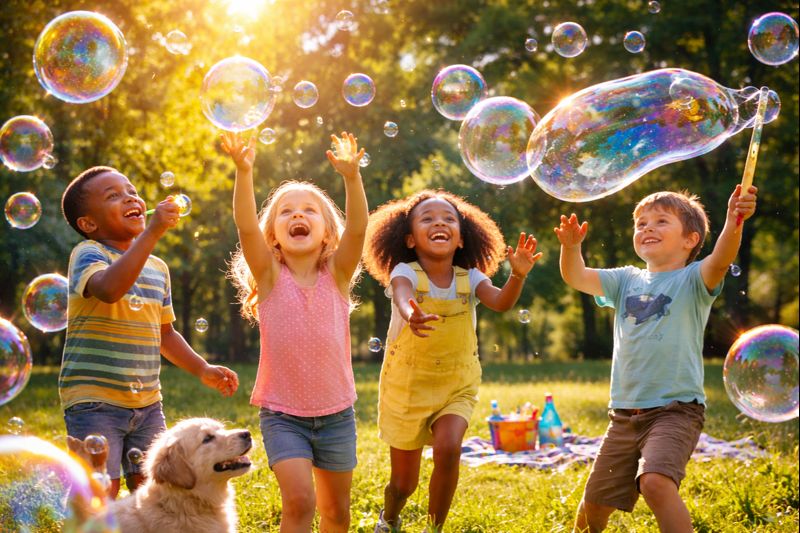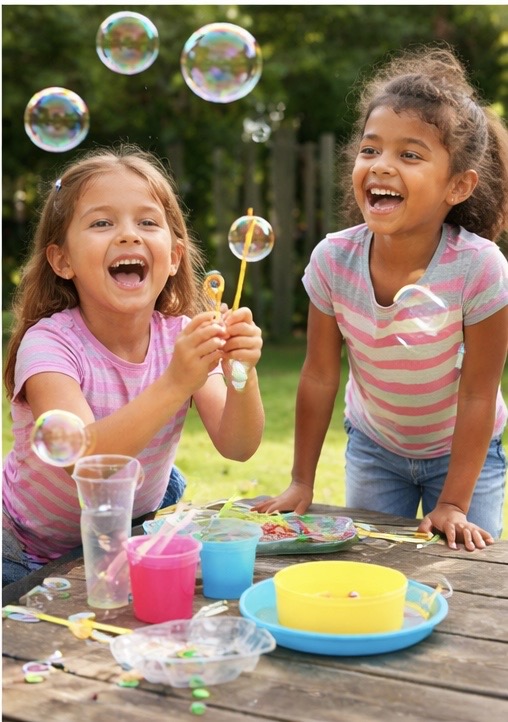



Blowing bubbles might look like simple fun.
But scientists say it may be doing much more than making kids smile.
Researchers who study how the brain learns have found that playful curiosity helps learning stick better than memorizing facts alone. And bubble blowing turns out to be one of the easiest ways to spark that curiosity.
Scientists say curiosity wakes up the brain
Learning scientists have discovered that when kids are curious, their brains pay closer attention. Instead of just remembering one answer, the brain starts connecting ideas.
At Harvard Graduate School of Education, researcher Elizabeth Bonawitz studies how children learn through play. Her work shows that kids who explore freely learn more deeply than kids who are only told what to remember.
When children ask questions like “Why did that bubble pop?” or “How did that one get so big?”, learning becomes an adventure instead of a chore.

Why bubbles are perfect for learning
Bubbles invite questions without asking for them.
Why are they round?
Why do they shimmer with colors?
Why do some float longer than others?
Scientists say this kind of wondering is exactly what helps the brain grow. Bubble play naturally encourages kids to test ideas, try again, and notice patterns, all without pressure.
And because bubbles are playful, the brain stays relaxed. A relaxed brain learns better.
The brain remembers more when it’s having fun
Neuroscientists Matthias Gruber and Charan Ranganath have found that curiosity activates parts of the brain linked to memory and reward. When people are curious, the brain releases chemicals that help information last longer.
That means learning sticks better when it starts with play.
Blowing bubbles first.
Learning science next.
Play is not extra. It is essential.
Some people think play is just a break from learning. Scientists say the opposite.
Play builds problem solving, creativity, focus, and confidence. Bubble play, in particular, combines movement, observation, and imagination, all at the same time.
That is why playful learning works in classrooms, at home, and even in theaters.
When bubbles meet wonder
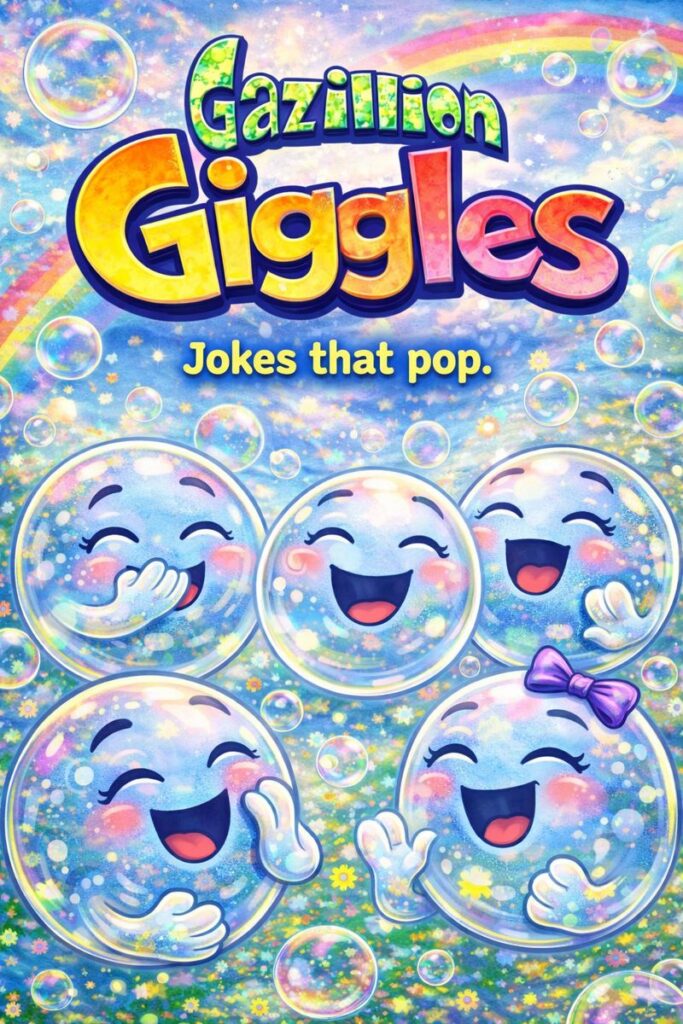
Shows like the Gazillion Bubble Show turn bubble play into something even bigger. Giant bubbles, floating shapes, and unexpected surprises invite audiences to wonder, laugh, and ask questions together.
And according to scientists, that shared curiosity is powerful.
Learning does not always start with a book.
Sometimes it starts with a bubble.
The science says it clearly
Memorizing facts still matters. But scientists agree it works best after curiosity.
First comes the wondering.
Then comes the learning.
So the next time you see a child blowing bubbles, remember this: they are not just playing.
They are practicing how to learn.